Before you compare two rents, check what's included.
The lower advertised rent isn't always the cheaper place to live. Before you choose between two rentals, find out which bills come with each one.
Heat, electricity, parking and laundry can change the comparison. A listing that says utilities are extra still leaves you with questions. Which utilities? Who receives the bill? Is it your own account or a share of a larger bill?
Read the services section before you sign
Ontario's standard lease is the province's residential tenancy agreement for most private residential rentals. It isn't just an application to rent the property. It records the agreement between the landlord and tenant.
Section 5 sets out the rent, including parking and other listed charges. Section 6 deals with services and utilities. Electricity, heat and water each have a place to identify who is responsible. There is also space to explain the arrangement when the tenant pays utilities, such as setting up an account or paying a portion of the costs.
The province's guide to the standard lease explains these sections in plain language. This is existing guidance, not a new rental rule.
Look at the completed agreement, not just the description in the advertisement. If the two don't match, get the difference explained before signing. A blank space isn't an answer.
Compare a full month, not one number
Here is a made up example, not a GTA rent quote. One apartment is advertised at $2,450. You allow $150 for utilities and $100 for parking, bringing your comparison budget to $2,700. Another is $2,600 with those items included. On those assumptions, the apartment with the lower advertised rent costs $100 more each month.
Your figures need evidence. Ask whether a recent set of utility bills is available with the previous occupant's personal information removed. Check which months the bills cover and whether they apply to the unit or the whole property. One mild month won't tell you much about a full year.
A previous bill is a budgeting aid, not a promise about your own usage. If you can't verify a cost, mark it as unknown. Don't quietly turn it into zero to make a place fit your budget.
Ask how a shared bill is calculated
If you're told you will pay a percentage of utilities, ask what that percentage applies to, how you will see the bill and how payment is handled. Have the arrangement explained clearly in the agreement. Don't assume that two basement rentals use the same setup.
If you already have a dispute about a charge, get advice from a licensed Ontario paralegal or lawyer rather than treating this article as a ruling on your lease.
You can still prefer the more expensive home because it suits your life better. Just make that choice with the bills included in the comparison, instead of discovering them after you've moved in.
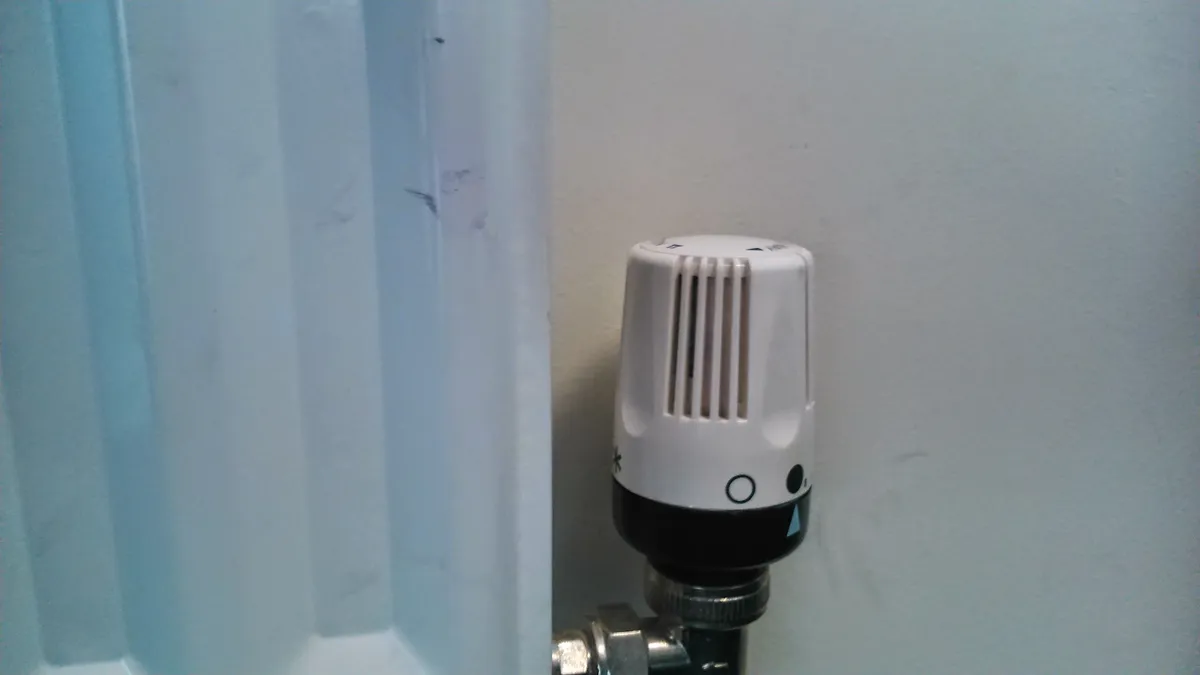
Illustrative heating photograph by 247homerescue, June 2014. Original photograph, used unchanged under CC0. It is not a SirLuckHomes listing or evidence of a particular property's utility costs.
