Buying a new home? Check the rebate date before counting the money.
A rebate can make a new home look more affordable. Before you count it as money available for closing, check the original agreement. Moving into a home this year doesn't, by itself, tell you whether that purchase qualifies.
CRA's October 2026 guidance makes an important distinction for buyers purchasing a new home from a builder: the agreement date matters. This is guidance on the existing federal rebate, not an announcement that every buyer now gets a new discount.
The closing date isn't the agreement date
For this federal first time buyer rebate, a builder purchase agreement must be signed after March 19, 2025 and before 2031. Other conditions apply, including buyer eligibility, use as a primary residence, construction deadlines and transfer of ownership.
CRA also explains that waiving a condition later doesn't turn an earlier agreement into a qualifying later one. An assignment or amendment doesn't automatically reset the original date either. Its October memorandum includes examples of both situations.
So if you're comparing a new builder purchase with an assignment, don't put the same rebate into both budgets and assume the difference is just the asking price. Ask your lawyer or tax adviser to review the actual agreement and its history.
Bring the whole paper trail
Start with the original signed purchase agreement. Add the schedules, amendments and any assignment documents. Put the dates in order. A current brochure or a recent email from the sales office isn't a substitute for that file.
Then ask a direct question: which agreement date are you using to assess this rebate, and why? You want an answer tied to your documents, not a general statement that the project has eligible buyers.
If you're still deciding whether to buy, make the review part of the cost comparison. If you've already signed, have the file checked before changing your closing budget. Don't alter a contract on your own to try to create eligibility.
Find out where the money would appear
A builder may agree to credit an eligible purchaser's federal rebate. That isn't automatic. Provincial relief has separate rules; this article doesn't determine eligibility for Ontario's rebate.
Ask for a written breakdown showing the purchase price, tax, each proposed rebate and the amount you would need on closing. Is a rebate already built into the advertised price? Who applies for it? What happens to the amount due if it isn't available? Have your lawyer explain the contract's answer before treating any credit as confirmed.
Keep any later refund separate from money you actually have available to close. A budget that works only if an unconfirmed rebate arrives is a budget worth checking again.
This is general information for Ontario buyers, not a tax eligibility decision. Your real estate lawyer or qualified tax adviser can assess the documents and current rules for your purchase.
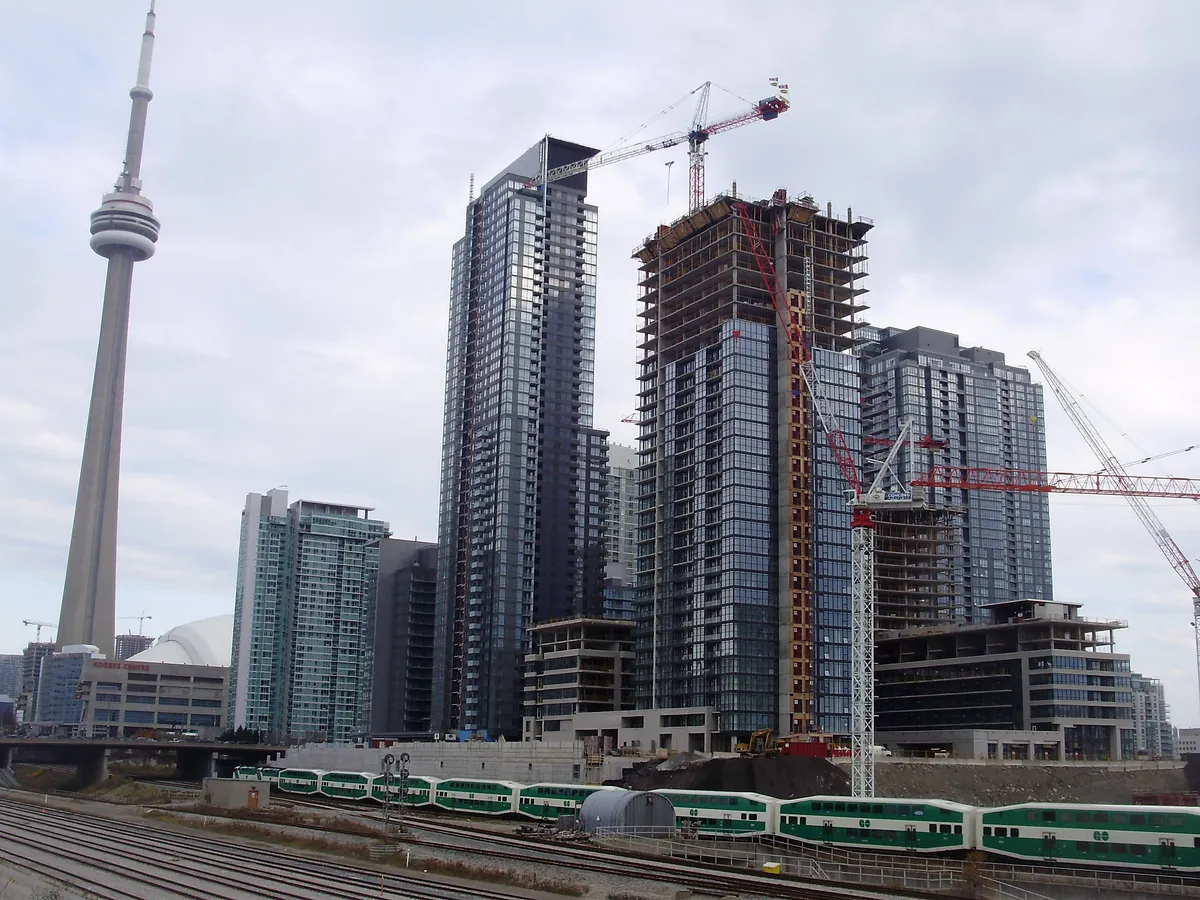
Illustrative archive photograph: CityPlace condominium construction in Toronto, November 2008, by GTD Aquitaine. Original photograph and public domain dedication. The buildings shown are not being advertised and no rebate eligibility is implied.
