Two closing dates. When is your sale money actually available?
You can have enough equity to buy your next home and still have a problem paying for it on closing day. The missing piece may be timing. Money expected from a sale next week is not money available for a purchase this week.
Before agreeing to dates, put the sale and purchase on the same page. Show the dates to your Realtor, lawyer and mortgage professional. Ask them to confirm how the money will move, not just whether the two prices fit your budget.
Start with the date you need the money
Here is an invented situation. Your purchase is due to close on November 20. Your sale is due to close on November 27. You expect to use $200,000 from the sale toward the purchase.
The immediate question is not whether the sale price leaves $200,000 after the relevant payouts and costs. It is what approved source would provide the required money on November 20. The sale scheduled for November 27 does not answer that question on its own.
Ask your lawyer for a transaction cash requirement and ask your lender or mortgage broker which part has been approved and when it can be advanced. Keep an estimate, a financing discussion and a completed approval separate. If something is still conditional, identify the condition and who must satisfy it.
A bridge loan is an application, not an assumption
TD describes bridge financing as short term borrowing that uses equity in the current home to help cover costs of the next one while the closings are apart. Its published requirements include sale and purchase agreements and approval for an eligible TD mortgage or Home Equity FlexLine on the new property.
That is a description of one lender's product, not a promise that every seller can obtain it. Ask your own provider what sale status, documents, security and other conditions it requires. Do not treat an asking price or an expected offer as proof that a lender will advance funds.
Get the cost explanation in writing too. Ask about interest, lender fees, legal costs, the repayment date and what happens if the sale closes later than expected. A short borrowing period can still involve costs that do not shrink in proportion to the number of days.
In the November 20 and November 27 example, ask the provider to explain the cost for the proposed dates and for a later repayment. This does not predict a delay. It checks whether the plan depends on everything happening exactly as hoped.
Moving the dates changes more than interest
If you could sell on November 20 and buy on November 27 instead, the problem would change. You would need somewhere to stay and somewhere to keep your belongings during the gap. Price the accommodation, storage and moving arrangements before calling that version cheaper.
If you buy first, ask about the expenses of the overlap, including the two properties' carrying costs and the insurance arrangements. Separate mortgage payments, borrowing interest and one time fees so you do not count an item twice or leave it out entirely.
RBC's buying and selling guidance discusses coordinating closings, selling first and buying first as different approaches. It notes that aligning dates can be difficult and recommends discussing the options with mortgage and real estate professionals. There is no universal sequence that makes every household's move easier.
The same date still needs a funds plan
Putting both closings on November 20 would remove the seven day gap on the calendar. It would not, by itself, explain the order in which your lawyer receives and sends money that day. Ask the lawyer handling the transactions how the purchase is to be funded and what would happen if the sale proceeds were not available when needed.
Do not book a moving schedule on the assumption that keys will be available first thing in the morning. Confirm possession and moving arrangements through the people handling the transaction. Keep any proposed change to a contractual date with your Realtor and lawyer rather than treating an informal conversation as an amendment.
The plan you want is specific: the money required, its source, its availability date, its cost and the action to take if an assumption changes. Bring that plan to the date negotiation. A closing date should work for the funding, not just the moving truck.
General information from SirLuckHomes Real Estate Brokerage, November 2, 2026. Dates and the $200,000 figure are hypothetical. Financing requires lender approval; obtain legal and mortgage advice for your own transactions.
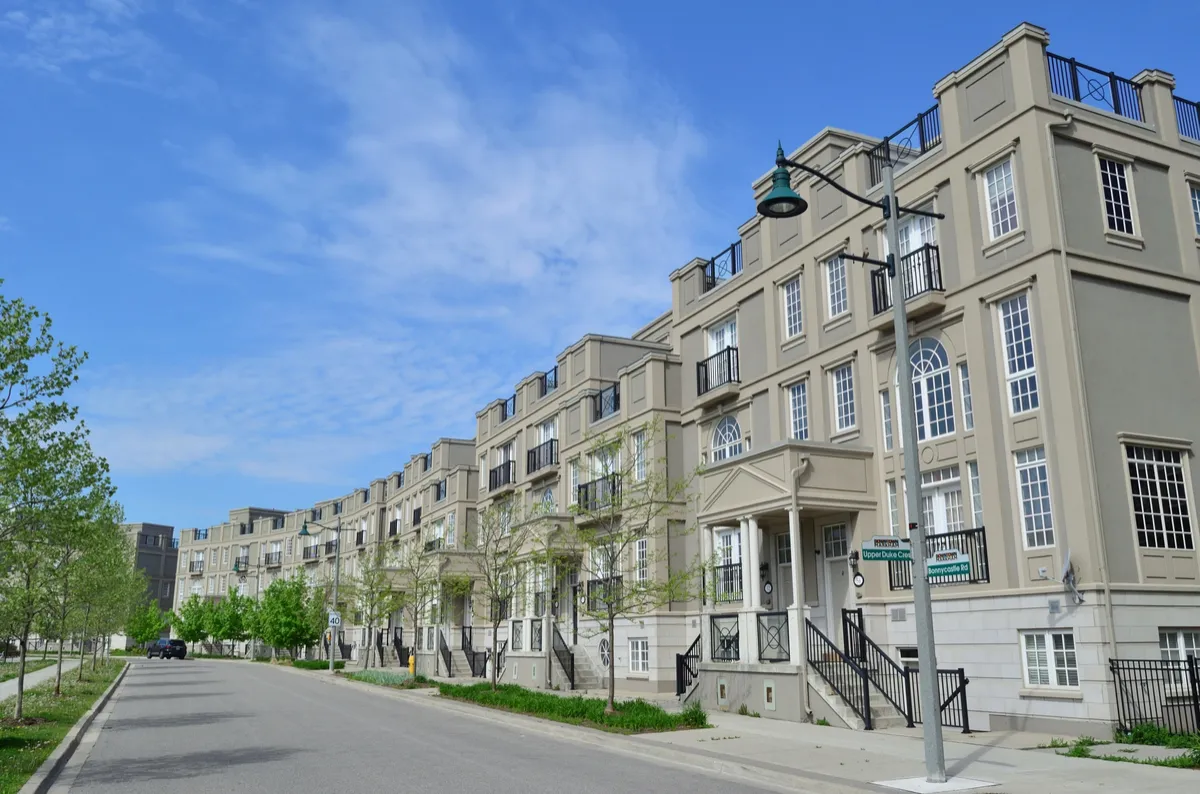
Illustrative photograph: Downtown Markham townhouses, Raysonho, May 26, 2020, via Wikimedia Commons, CC0. Resized for display. Not a listing or a representation of the example's homes or financing.
