Your condo fees include insurance. That does not mean you are covered.
Your condo fees help pay for the building's insurance. That does not mean your furniture, renovated kitchen or every bill following a water leak is covered.
Before buying a GTA condo, put the corporation's insurance documents beside the policy you intend to buy. Looking at either one on its own can leave an expensive question unanswered: who pays for the part in between?
Start with what this building calls a standard unit
In Ontario, a corporation's property coverage and an owner's coverage do different jobs. The Condominium Authority of Ontario explains that the corporation's policy covers the standard unit, not personal belongings or improvements. The governing documents define that standard. Do not assume everything you can see inside the suite belongs to it.
A freshly renovated suite makes this especially important. The seller may have installed flooring, cabinets or other finishes that sit outside the building's standard unit definition. A beautiful kitchen tells you what you are buying. It does not tell you what an insurer would restore.
Ask the property manager for the standard unit definition and give it to your insurance broker with a description of the suite's finishes. Ask the broker to identify what needs coverage under your own policy. If the definition is missing or unclear, have your lawyer address that gap. Guessing is not a substitute for the document.
The corporation's deductible is not your policy's deductible
Your own deductible is the portion of an eligible claim you agree to pay. The corporation has its own deductibles. Those numbers may be very different, and different types of damage can carry different amounts.
The CAO cautions that a corporation's bylaws can extend the circumstances in which an owner is responsible for its deductible, including some situations where nobody is directly at fault. Whether a particular charge is valid depends on the facts, governing documents and applicable law. A leak starting in your suite is not, by itself, a complete legal answer.
That is why asking only, "Do I have water coverage?" is too broad. Ask what protection applies if the corporation lawfully charges you its deductible, which causes of loss qualify, and what limit and exclusions apply.
A $40,000 gap worth investigating
Here is a hypothetical comparison, not a real claim or a suggested coverage amount.
Suppose the building's insurance schedule shows a $50,000 water damage deductible. The quote you received includes a maximum of $10,000 for an eligible corporation deductible assessment. The difference between those two numbers is $40,000.
That calculation does not mean you owe $50,000, or that your insurer will pay $10,000. First, someone must establish whether the corporation can charge you, what amount is properly chargeable, and whether your policy responds to that particular event. Your own deductible or other policy terms may also affect payment.
What the arithmetic does reveal is a question to resolve before choosing the quote. If an eligible charge reached $50,000 and only $10,000 of coverage were available, where would the balance come from? Take that exact scenario to your broker. Ask for a written explanation and, if available, an alternative quote that addresses the exposure.
Then compare the actual policies, not just the premium. A cheaper quote with a smaller relevant limit is not the same product at a discount.
Do not forget the cost of being unable to live there
A repaired floor is only one part of a disrupted home. The Financial Consumer Agency of Canada says condo policies may cover additional living expenses following a covered loss, subject to a limit. They may also cover belongings, improvements and personal liability. The actual wording matters.
Ask how the proposed policy treats temporary accommodation, what dollar or time limits apply, and what evidence you would need. Do not assume every reason for leaving the building triggers payment. Keep an inventory of belongings, photos and major receipts somewhere you can access if the suite is unavailable.
If you intend to rent the unit out, share it or use it for a business, tell the insurer. Get a quote for the actual use rather than carrying assumptions from an owner occupied policy into a different situation.
Bring these documents to the same conversation
The corporation's current insurance certificate or summary, including deductible information and the policy period.
The standard unit definition and relevant insurance or deductible bylaws.
Your proposed policy wording, endorsements, limits and exclusions, not only the price page.
A description of renovations, belongings and how you will occupy the unit.
Ask your lawyer about responsibility under the condo documents. Ask your licensed insurance broker about coverage, exclusions and available options. These are connected questions, but they are not interchangeable professional roles.
For an existing owner, repeat the comparison when the corporation renews its insurance, changes a deductible or amends relevant documents. Also revisit it after renovations. A policy chosen years ago may no longer match the building or the suite.
The practical takeaway: do not stop at "insurance included" on a condo listing. Find the boundary between the corporation's policy and yours, then deal with the gap before you need to make a claim.
SirLuckHomes Real Estate Brokerage
General Ontario consumer education, reviewed October 24, 2026. Not individual insurance or legal advice. Coverage and responsibility depend on the specific documents, policy terms, facts and applicable law.
Official guidance: CAO condo insurance; CAO repairs after damage; FCAC insurance guidance.
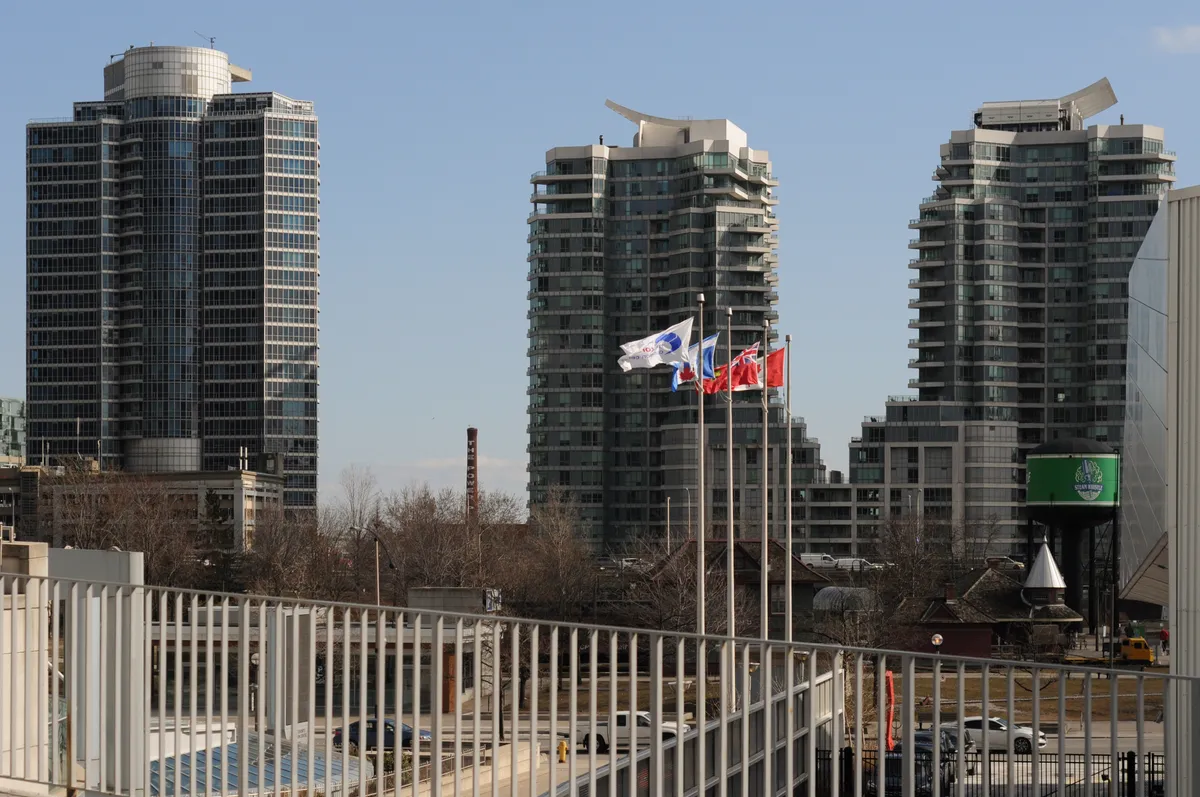
Illustrative Toronto condominium photograph by Milan Suvajac, April 1, 2019, CC BY-SA 4.0. Original photograph, displayed to fit. It makes no statement about the pictured buildings' insurance, finances or condition.
