Buying the house? Read the water heater contract too.
Before you agree to take over a rented water heater with an Ontario home, get the contract. A monthly charge on a utility bill tells you what the seller pays now. It doesn't tell you what it costs to leave, what repairs are included or what you'll be agreeing to.
The kitchen gets the attention. The tank downstairs can keep sending bills long after moving day. Give its paperwork a few minutes before the purchase becomes a commitment.
First, find out what is actually rented
Ask the seller for the equipment rental agreement, its schedules and a recent bill. Match the provider and equipment description to the unit in the house. A service sticker alone doesn't establish ownership or the terms of a contract.
Ontario's consumer guidance warns that buying a home may mean taking responsibility for an existing appliance contract. Ask your Realtor and lawyer to review how the purchase agreement deals with that equipment. Don't rely on a casual "it stays with the house" when the question is who pays for it.
If the seller doesn't have the agreement, ask them to obtain it from the provider. Request written confirmation of the current charge, any scheduled increases, the term, transfer requirements and the available ways to end it. A missing document is a reason to resolve the question, not to guess that the contract must be inexpensive.
The title notice and the rental contract are different things
You may have heard that Ontario banned equipment notices on title. That doesn't mean the rental payments disappeared.
The Homeowner Protection Act became law on June 6, 2024. Ontario says it banned registration of Notices of Security Interest for consumer goods and deemed existing consumer notices expired. The province also states that the ban does not cancel the underlying equipment contract or eliminate the business's security interest in the equipment. Commercial notices are treated differently.
This is an existing rule, not a new announcement. Its practical consequence for a homebuyer is straightforward: a title review and an equipment contract review answer different questions. Ask your lawyer about both. Don't stop paying or decide a contract is unenforceable based on a headline about the ban.
A lower monthly bill isn't the whole comparison
Use the same period and the same tax treatment when comparing options. Here's a hypothetical example, not a provider quote or a recommendation.
Suppose rent is $45 a month including tax, and you're comparing the next three years. If that charge stays unchanged, 36 payments total $1,620. Suppose the provider also offers a written buyout of $900 including tax, with no additional buyout fee in this example.
Dividing $900 by $45 gives 20 months. That is when avoided rental payments would equal the buyout price if nothing else changed. It isn't proof that buying out saves you money.
You would be spending $900 now instead of spreading payments out. You also need to know what service coverage ends when you buy. If a hypothetical $350 repair fell to you afterward, your spending would become $1,250. If the tank needed replacement, that would be a different calculation again. Neither repair cost nor remaining life can be read from a rental bill.
Put the actual buyout quote, rental terms and the equipment's condition beside one another. Add any removal, administration or installation charges that apply. Don't add a buyout and a replacement purchase automatically as though they are always the same option. Ask what each proposed route actually requires.
Read what happens after you buy it out
A real Ontario provider's terms show why this matters. Kitchener Utilities says a customer exercising its buyout option accepts the heater in its existing condition, subject to any transferable manufacturer's warranty, and assumes repair and maintenance responsibility. Those are that provider's terms, not a rule for every GTA rental company.
For your equipment, ask which repairs and callouts are currently included, what exclusions apply, whether any warranty transfers, and who pays if the unit fails after a buyout. Have an appropriately qualified technician assess condition or installation concerns. A home purchase is not the time to disconnect, relocate or alter gas or electrical equipment yourself.
Renting may include service you value. Owning may suit you better. The point is to compare the obligations and costs you can verify, not to declare every rental bad or every buyout a bargain.
Settle the responsibility before closing
If you want the seller to buy out the contract, ask your Realtor and lawyer how that should be documented and what confirmation is needed. If you're taking it over, understand the transfer process and your obligations first. Neither outcome should depend on a conversation nobody wrote down.
Keep the agreement, provider correspondence and any payment or release confirmation with your purchase records. Check the first bills after closing against what was agreed, and raise discrepancies promptly with the provider and your lawyer where necessary.
Buying the house is a big decision. You don't need a small monthly charge turning into an unanswered question afterward.
SirLuckHomes Real Estate Brokerage
General Ontario buyer education, reviewed October 25, 2026. Not individual legal or equipment advice. Your agreement, provider terms and applicable law determine your obligations.
Official reading: Ontario home service contract guidance; Ontario's explanation of consumer Notices of Security Interest; Kitchener Utilities' own rental terms.
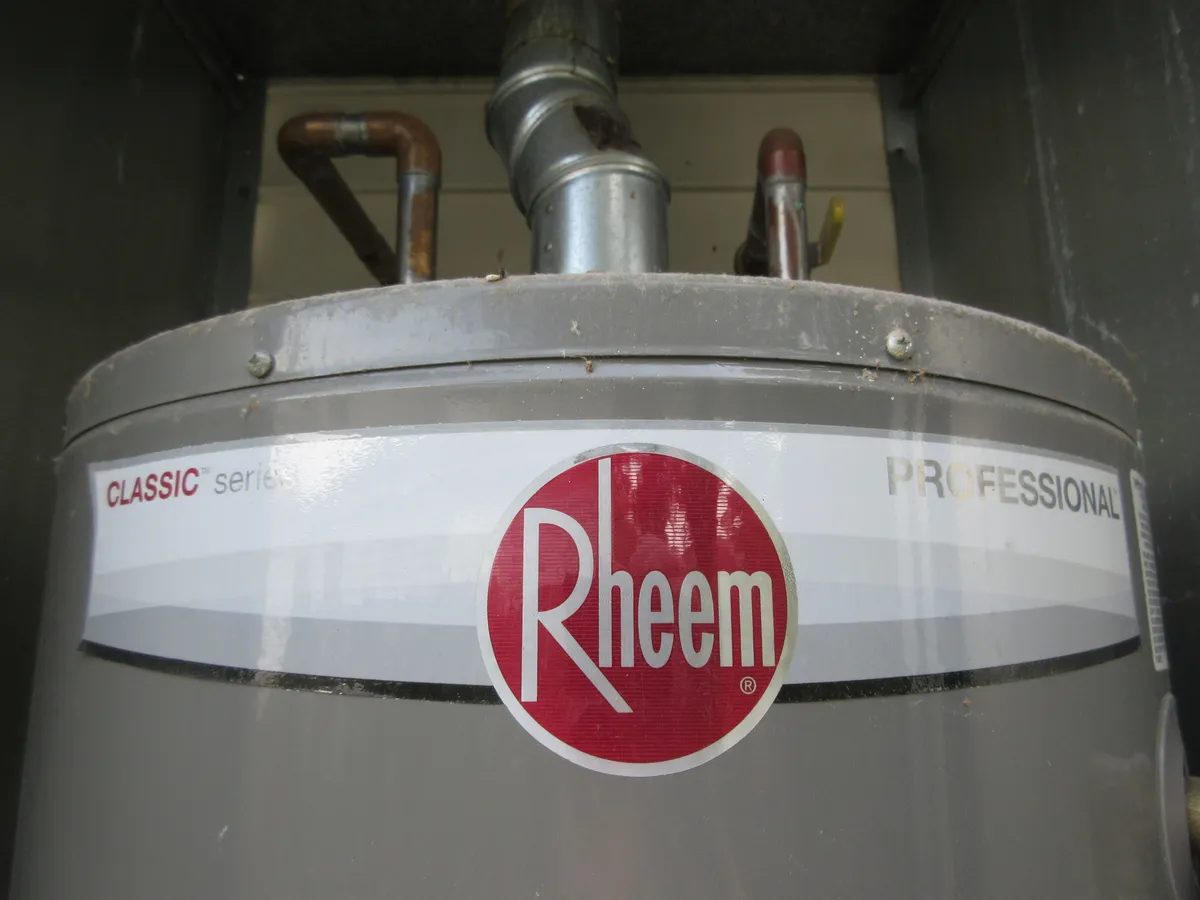
Illustrative water heater detail photographed by Infrogmation of New Orleans, August 28, 2023, CC BY-SA 4.0. Original photograph displayed to fit. Not a SirLuckHomes listing or evidence of a rental contract, equipment condition or endorsement by the manufacturer.
