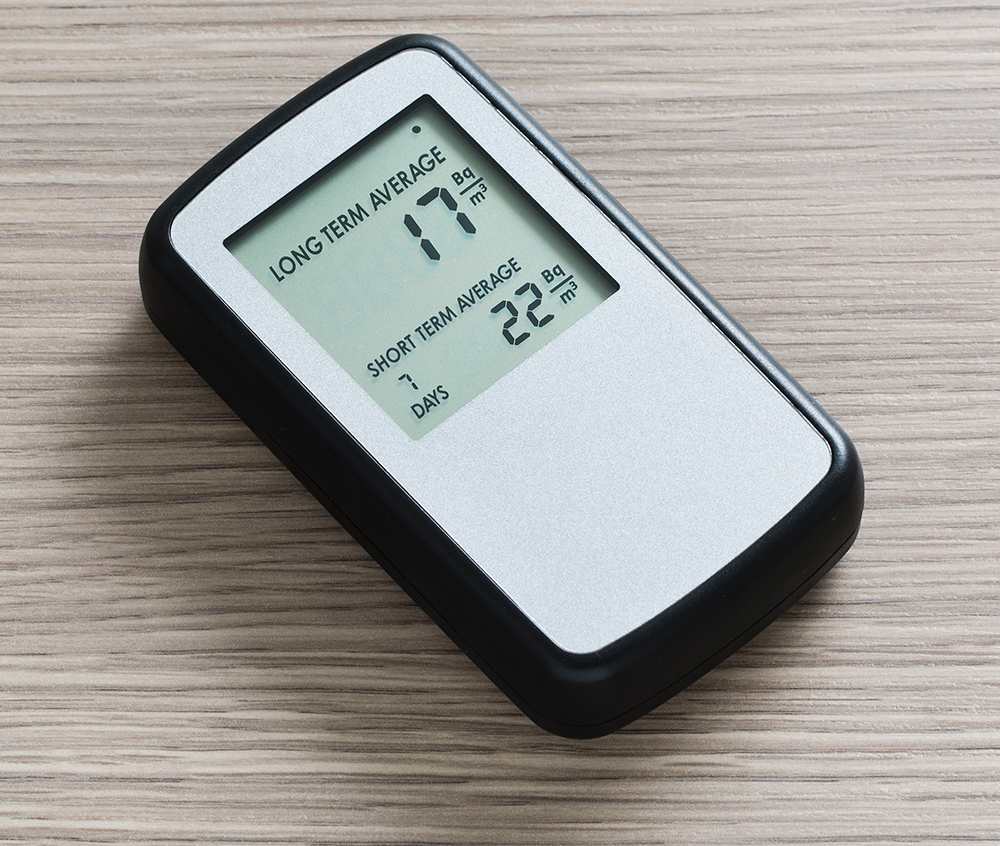
A finished basement doesn't tell you the radon level. A test does.
A finished basement can look spotless and still tell you nothing about its radon level. Fresh paint, nice flooring and a comfortable room aren't measurements. If you haven't tested, you don't have that answer yet.
Radon is an invisible, odourless radioactive gas that can accumulate indoors. Health Canada recommends testing every home. Results can differ even between homes on the same street. Your neighbour's result isn't your home's result. Health Canada's measurement guide explains why.
Give the test enough time
Health Canada recommends a test lasting 3 to 12 months, with at least 91 days during the heating season. A quick reading over a weekend doesn't replace that test. Levels change over time, and testing outside the heating season can underestimate the annual average.
For an Ontario homeowner, October is a sensible time to plan the test around the colder months. Start by reading the instructions, choosing the location and recording the start date. Put the end date in your calendar too. Buying a detector and forgetting it isn't a completed test.
You can use a test kit or hire a measurement professional. Health Canada's home testing page recommends a certified provider who conducts a test for at least three months. If you choose an electronic monitor, check that it has passed the Canadian National Radon Proficiency Program's performance testing. A product listing alone doesn't establish that.
Test the space you actually live in
The measurement guide calls for testing on the lowest lived in level, in a normally occupied space. It uses more than four hours a day to define normal occupancy. A basement bedroom or office may be relevant. A storage corner isn't automatically the right place just because it's downstairs.
Follow the device instructions and placement guidance. Keep it where it won't be disturbed, with airflow around it, away from windows, vents and heat sources. Don't change your normal habits to improve the reading.
If you're turning a basement into a space where someone will spend much more time, include radon testing in that planning conversation. Decorating the room and checking its air are different jobs. A certified measurement professional can help when the placement or use of the space is unclear.
Keep the report, not just a photograph of the screen
When the test is finished, keep the dates, location and result together. If you're buying a home and a radon result is supplied, ask for that information rather than relying on a sentence saying it was tested. A photograph without context leaves important questions unanswered.
Health Canada's Canadian radon guideline is 200 becquerels per cubic metre, written as Bq/m³. It recommends corrective action within one year when the level exceeds that guideline, and sooner when levels are higher. The guideline is not a promise that any exposure below it is risk free.
Take a result that needs action to a certified radon professional for advice about reducing the level. For a home purchase, discuss the report and any proposed agreement terms with your Realtor and lawyer. This article doesn't determine a property's condition, a person's health risk or the legal terms of a sale.
Sources and photograph
This is homeowner education, checked against the linked Health Canada guidance on October 10, 2026. It is not a new policy announcement.
Illustrative electronic radon monitor photographed by CKristiansen on May 19, 2016. The photograph is used unchanged under CC BY-SA 4.0. Its displayed readings are not a result for any SirLuckHomes property, and the photograph is not a recommendation or confirmation of this model's current approval.