Wet basement? Find the water’s route before buying the fix.
A wet basement doesn’t tell you what to buy. Water near a window after a downpour and water rising through a floor drain can leave the same mess, but they point to different questions. Before you spend money on a pump or a valve, ask a licensed plumber what route the water could be taking and what they can actually verify.
Ask what the equipment would stop
A backwater valve helps keep sewage from flowing backward through the sewer connection. It won’t fix a window well that fills with rain. A sump pump moves water collected in a sump pit. That’s a different job. The City’s prevention guide separates outdoor drainage and foundation checks from work on the plumbing inside.
Say you notice water below a basement window after a storm. Tell the plumber where it showed up first and ask whether the findings point to the plumbing or whether someone should inspect the window well, grading or foundation. If water first came up at a drain, say that instead. The observation helps direct the inspection. It doesn’t prove the cause. Ask for the suspected route, what supports it and what the proposed work won’t fix.
Check the assessment subsidy before booking
Toronto’s Basement Flooding Protection Subsidy Program includes a one time home plumbing assessment for eligible properties. The City can cover up to 80% of the invoiced cost, to a maximum of $500. Your licensed plumber needs to complete the City’s assessment form. You don’t have to buy the recommended work to qualify for the assessment subsidy.
Here’s what that cap means. On an eligible $450 assessment, 80% is $360. On an eligible $700 assessment, 80% is $560, but the cap brings the maximum down to $500. These are examples, not price quotes or guarantees. Check the property’s subsidy history, current eligibility and required paperwork with the City. Get the assessment fee separately from any equipment quote and keep the paid invoice.
If you already have two quotes for different devices, don’t just compare the totals. Ask each contractor to write down which route the device addresses. If neither can answer that yet, the assessment is the next conversation, not the installation.
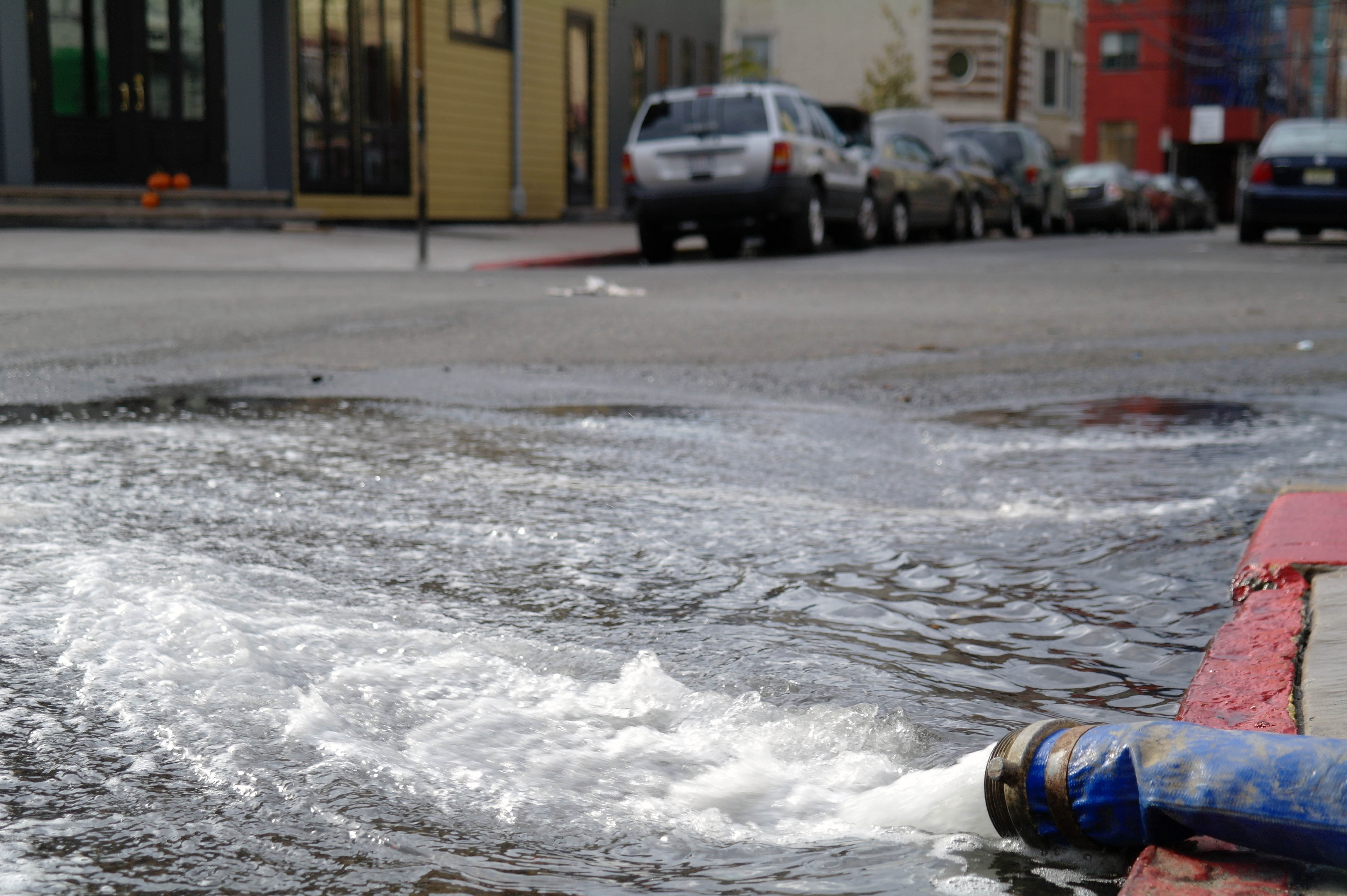
General homeowner education. A licensed plumber or the appropriate building specialist should assess your property. Illustrative cover: Pumping out a basement by Alec Perkins, Hoboken, 2012, CC BY 2.0. Original photo unchanged; not a Toronto property or a recommended discharge setup.
